
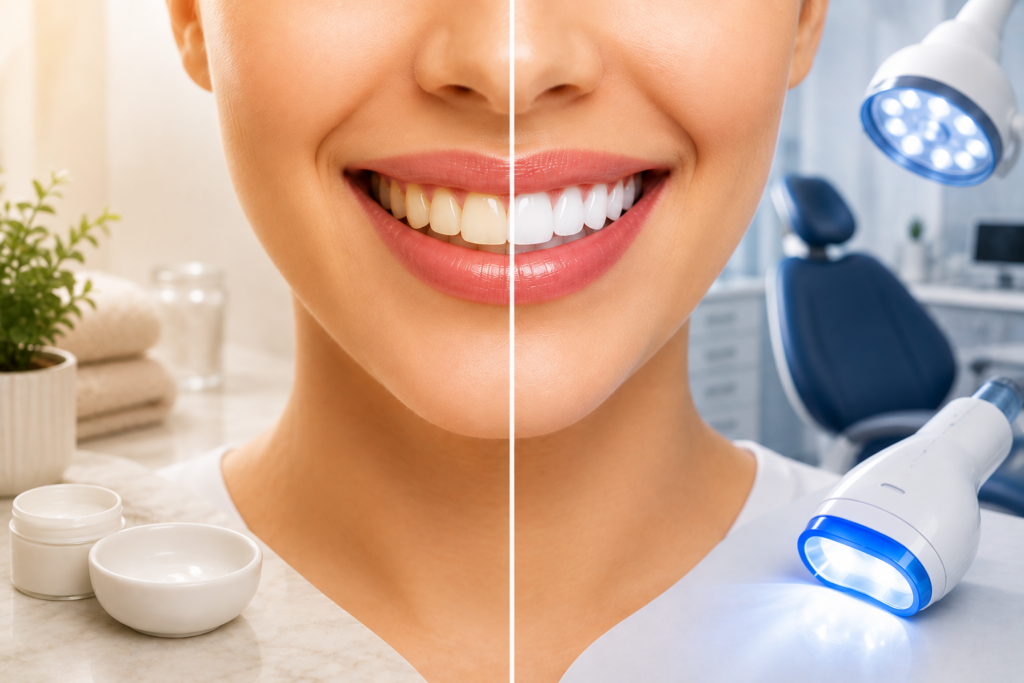
Search “teeth whitening,” and you’ll find charcoal powders, whitening pens, LED kits, strips, and no shortage of home remedies for yellow teeth promising a brighter smile within days. Some of it works. Some of it doesn’t do much at all. And a few methods can actually damage your teeth if used the wrong way.
At Malpas Dental Surgery, we get asked about this regularly; patients want to know if they really need to see a dentist, or whether a home kit will do the job just as well. Here’s an honest breakdown of what’s safe, what isn’t, and how the two approaches actually compare.
Why Teeth Discolour in the First Place
Before comparing methods, it helps to know what you’re treating. Staining generally falls into two categories:
Surface stains from coffee, tea, red wine, or smoking, which sit on the enamel
Deeper discolouration from ageing, certain medications, or the natural yellowing of dentine underneath the enamel
Surface stains respond well to most whitening methods. Deeper discolouration usually needs a stronger, professionally controlled approach to shift.
Most Whitening Techniques Work Effectively for Surface Stains
Not every popular home remedy is created equal, and safety varies a lot between them.
Generally low-risk:
- Whitening toothpaste with mild, non-abrasive polishing agents
- Reducing staining foods and drinks, and rinsing with water afterward
- Whitening strips from reputable brands, used exactly as directed
Worth approaching with caution:
- Charcoal powder – popular online, but its abrasiveness can wear down enamel over time with repeated use, which can actually make teeth look more yellow as the dentine underneath becomes more visible
- Baking soda or lemon juice mixtures – the acidity can erode enamel, and this damage isn’t reversible
- Unregulated whitening kits bought online, particularly those with high concentrations of peroxide not intended for home use without professional supervision
The common thread: anything abrasive or acidic used frequently can trade a short-term brightening effect for long-term enamel damage – and enamel doesn’t grow back.
In-Practice Teeth Whitening: Why It’s Different
In-practice teeth whitening carried out by a dentist uses professional-grade whitening agents at concentrations that aren’t available over the counter, applied under controlled conditions. A few things set it apart:
- Your gums and soft tissue are protected before the whitening gel is applied, reducing the risk of irritation or sensitivity
- The strength and application time are tailored to your teeth, rather than a one-size-fits-all approach
- Results are more even and predictable, since a dentist can see exactly how your teeth are responding
- Any underlying issues, cavities, cracks, and gum problems, are checked first, since whitening over unaddressed dental problems can cause discomfort or complications
It also tends to work faster and last longer than most home methods, particularly for deeper discolouration that surface treatments can’t fully touch.
Best and Safest Teeth Whitening: How to Choose
If you’re weighing up the best and safest teeth whitening route for your own teeth, a few questions are worth asking yourself:
- Is my discolouration surface-level, or has it been building for years?
Deeper staining usually needs professional strength to shift. - Do I have sensitive teeth or gums?
Home kits with generic strength gels are more likely to cause discomfort if you do. - Have I had a dental check-up recently?
Whitening over an unnoticed cavity or gum issue isn’t safe, regardless of the method. - Am I looking for a quick touch-up, or a proper reset?
Mild maintenance can often be handled at home; a bigger change is safer and more effective in-practice.
Safe Teeth Whitening Methods: A Simple Rule of Thumb
Across both home and in-practice options, the safest teeth whitening methods share a few things in common: they avoid abrasive scrubbing, they don’t rely on high-strength acids or unregulated peroxide levels, and they’re used within recommended limits rather than as a daily habit. When in doubt, a professional opinion beats a guess, especially since whitening the wrong way can cause damage that’s far more expensive to fix than the original discolouration.
Get a Professional Opinion at Malpas Dental Surgery
If you’re unsure whether your teeth are good candidates for home whitening, or you’d simply prefer a safer, faster, and more even result, our team at Malpas Dental Surgery can talk you through your options after a proper assessment.
Book a consultation with Malpas Dental Surgery in Cheshire to find out which whitening approach is genuinely right and safe for your smile.