
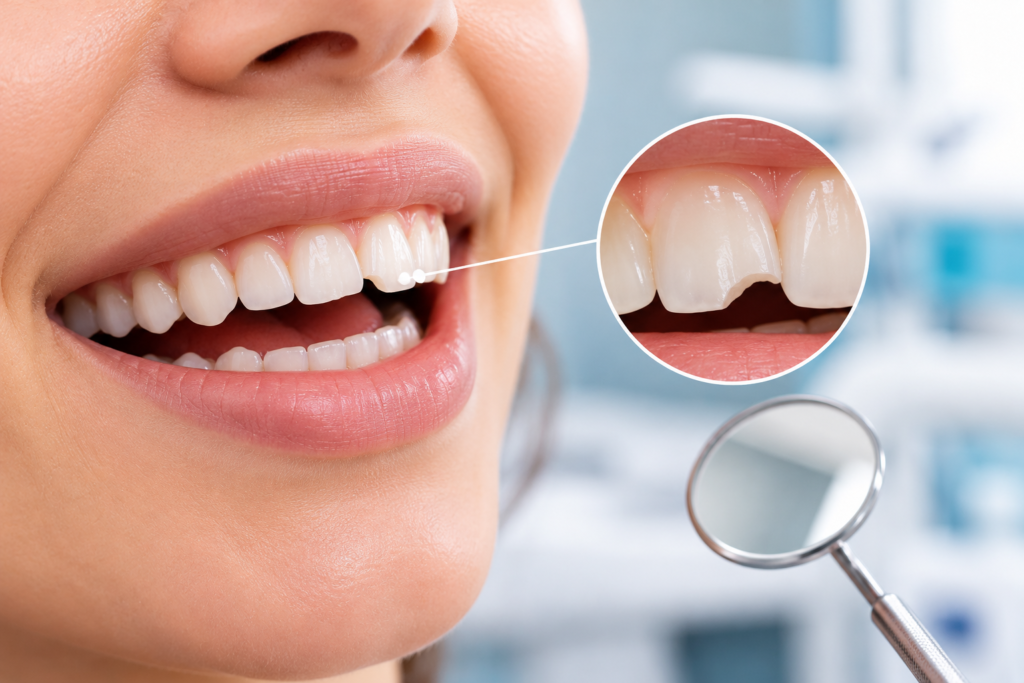
A chipped tooth can be more than a cosmetic concern. A small break may leave a sharp edge, cause sensitivity when you eat or drink, or reveal damage that isn’t obvious at first glance. Whether your tooth chipped while eating, during a fall, or after a knock to the mouth, getting advice early can help you understand the damage and protect your smile.
If you’re looking for chipped tooth treatment in Malpas, we can assess the tooth and discuss suitable next steps. Treatment depends on factors such as the size and position of the chip, whether the tooth is painful, and whether the damage has reached deeper layers. Below, we explain what causes teeth to chip, whether a small chipped tooth can get worse, and the options a dentist may consider.
What causes teeth to chip?
Tooth enamel is strong, but it can still chip or crack. Common causes include:
- Biting hard foods or objects, such as ice or boiled sweets
- A knock to the mouth, a fall, or a sports injury
- Tooth decay, which can weaken the tooth
- Existing cracks or large fillings that leave less natural tooth structure
- Teeth grinding or clenching, which can put repeated pressure on teeth
Sometimes a tooth chips even when the trigger seems minor, particularly if it was already weakened. A dental examination can help identify whether the damage is limited to the surface or extends deeper.
Can a small chipped tooth get worse?
Yes. A small chip can become more troublesome if the tooth is exposed to further pressure or if there is an underlying crack or decay. The damaged edge may also irritate your tongue or cheek, and sensitivity can develop if the inner layers of the tooth are affected.
That does not mean every small chip will worsen, but it is sensible to have it checked rather than assuming it is harmless. A dentist can assess the tooth and recommend whether it needs treatment or monitoring.
Chipped tooth treatment options
Treatment depends on the size and position of the chip, whether the tooth is painful, and how much healthy tooth remains. After examining the tooth and taking an X-ray if needed, the dentist can discuss suitable options. These may include:
- Smoothing or reshaping: For a very minor chip, smoothing a sharp edge may be enough.
- Composite bonding or a filling: Tooth-coloured material can rebuild a small or moderate area and restore the tooth’s shape.
- A crown: A more extensively damaged or weakened tooth may need a crown to cover and protect it.
- Root canal treatment followed by restoration: If damage has reached the tooth’s nerve, root canal treatment may be needed before the tooth is restored.
Not every option will suit every tooth. Your dentist will explain the benefits and limitations of the recommended treatment.
What to do if you chip a tooth
Until you can speak to a dentist:
- Rinse your mouth gently with warm water.
- If there is bleeding, apply gentle pressure with clean gauze.
- If you can find the broken piece, keep it in a clean container and take it with you.
- Choose soft foods and avoid biting with the damaged tooth.
- If an edge is sharp, dental wax can help cover it temporarily.
Avoid trying to glue or file the tooth yourself. These steps may help protect your mouth, but they do not repair the tooth.
When should you seek urgent dental advice?
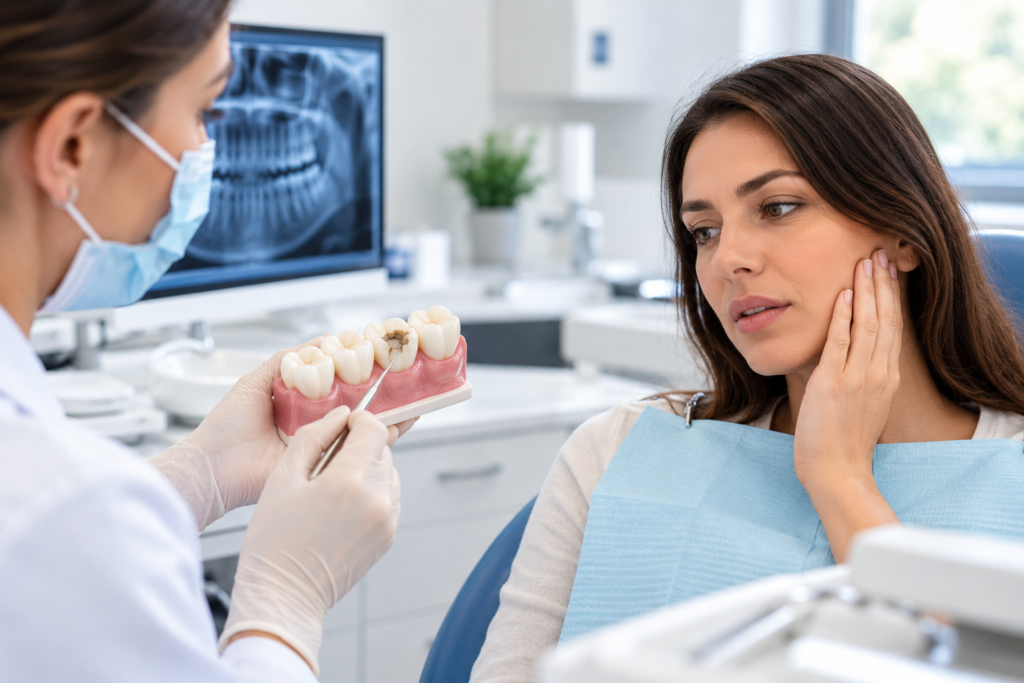
Contact a dentist promptly if the chip is large, you have significant or ongoing pain, strong sensitivity, swelling, bleeding that does not settle, or difficulty biting. A knocked or loose tooth, facial injury, or signs of infection also need prompt attention. If you are unsure how urgent the problem is, call the practice for guidance.
Chipped or broken a tooth in Malpas?
A chipped tooth can range from a minor rough edge to a more serious break that needs prompt attention. Even if the damage looks small, an assessment can help determine whether the tooth needs smoothing, repair, or further protection, and whether an underlying crack or decay may be contributing to the problem. Avoid chewing on the affected side and don’t try to repair the tooth yourself.
If you’ve chipped or broken a tooth in Malpas, contact Malpas Dental Surgery to discuss your symptoms and arrange an assessment. The right treatment will depend on the condition of your tooth, so a dentist can examine the area and explain the options that are appropriate for you.