
If you have several missing teeth, you may have wondered whether dental implants can replace them all – and whether you would need an implant for every missing tooth.
Today, patients have more tooth replacement options than ever before. Multiple dental implants can be used to support individual replacement teeth, bridges, or even a full set of fixed replacement teeth, depending on your circumstances.
At Malpas Dental Surgery, we understand that choosing a tooth replacement can feel like a big decision. You want to know what is suitable for you, what the treatment involves, and what alternatives are available.
In this guide, we explain how multiple implants work, when an implant-supported bridge may be considered, what full-mouth dental implants involve, and what you can expect when discussing your options with our team.
Can dental implants replace several missing teeth?
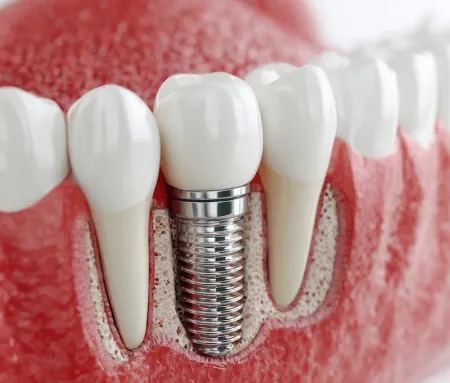
Yes. Dental implants can be used to replace several missing teeth, whether the gaps are next to each other or in different areas of your mouth.
However, having several missing teeth does not necessarily mean you need one implant for every tooth.
For example, if you have several neighbouring teeth missing, two or more implants may be able to support a dental bridge. This can replace several teeth without placing an implant beneath every replacement tooth.
The right approach depends on your individual circumstances, including your gum health, available bone, remaining teeth and bite.
That is why a proper assessment is important. Rather than recommending the same treatment for everyone, your dentist can look at your particular needs and explain which options are appropriate.
What are multiple dental implants?
Multiple dental implants are used when more than one missing tooth needs to be replaced.
Depending on your situation, implants may support:
- Individual crowns for separate missing teeth
- An implant-supported bridge for several neighbouring teeth
- An implant-retained denture
- A fixed full-arch restoration where most or all teeth are missing
An implant acts as an artificial tooth root. Once it has healed and become stable in the jaw, it can support a replacement tooth or larger restoration.
One important thing to remember is that implant treatment is not simply about replacing a certain number of teeth. Your dentist will consider how the replacement teeth need to function together and how they will fit with your existing teeth.
Do you need one implant for every missing tooth?
Not always.
This is a common concern for patients considering implants, particularly if they have several missing teeth.
Where several teeth are missing next to one another, an implant-supported bridge may allow multiple replacement teeth to be supported by fewer implants.
In other situations, separate implants and crowns may be more appropriate.
There is no single solution that works for everyone. The number and position of implants will depend on factors such as your bone levels, gum health, bite, and the type of restoration being planned.
At Malpas Dental Surgery, we believe you should understand why a particular treatment is being recommended, rather than simply being told what treatment to have.
What are full mouth dental implants?
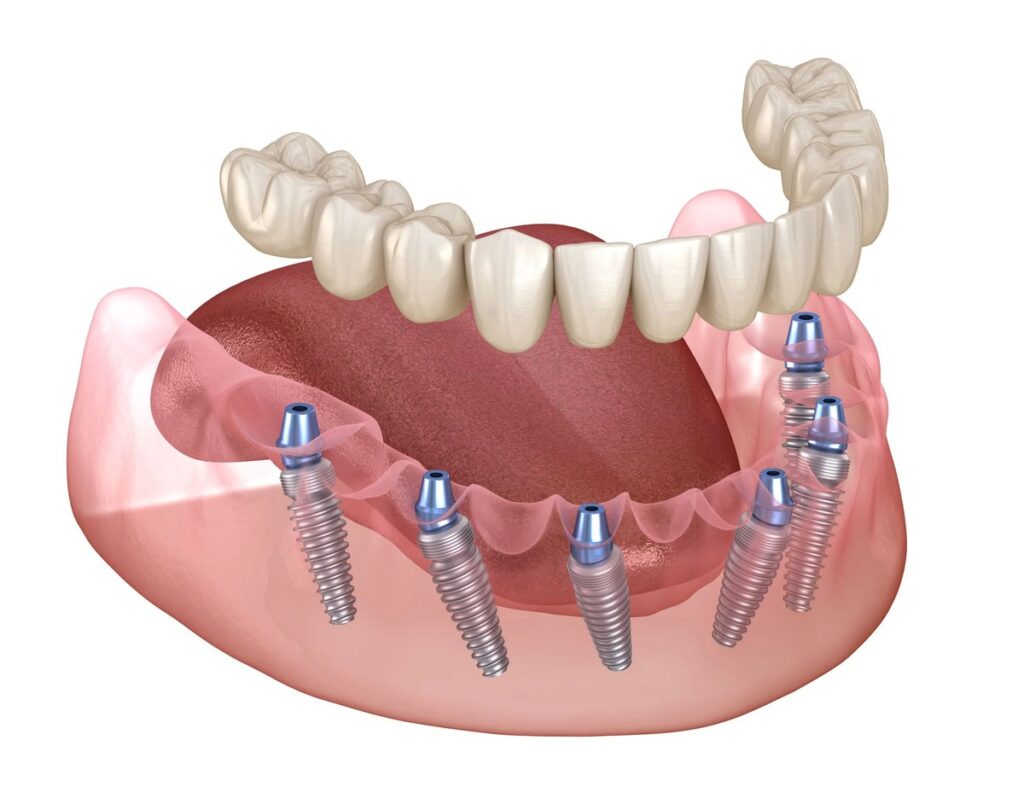
If you have lost most or all of your teeth, you may have come across the term full-mouth dental implants.
Despite the name, this does not necessarily mean placing an individual implant underneath every tooth.
Instead, a number of carefully positioned implants can be used to support a full set of replacement teeth. For some patients, this can provide a fixed alternative to conventional removable dentures.
Full-mouth treatment is more complex than replacing one or two teeth, so careful planning is particularly important.
Your dentist will need to consider your gums, jawbone, remaining teeth, bite, and general oral health before deciding whether this type of treatment is suitable.
Most importantly, you should have a clear understanding of what the treatment involves before making a decision.
What if you still have some natural teeth?
Having several missing teeth does not automatically mean you need full-mouth treatment.
If your remaining teeth are healthy, they may be retained and incorporated into your treatment plan.
For example, you may only need implants to replace the teeth that are missing. Alternatively, your dentist may recommend a combination of treatments depending on the condition of your existing teeth.
Preserving healthy natural teeth is an important part of planning your treatment. Your dentist should always consider what can be retained, not just what needs to be replaced.
What if I have been missing teeth for a long time?
If a tooth has been missing for some time, the jawbone in that area can gradually change. This may affect the amount of bone available for an implant.
However, this does not automatically mean that implants are not possible.
An assessment and appropriate dental imaging can help your dentist understand the condition of the area. If additional treatment is needed, this can be discussed with you before you commit to the implant procedure.
This is one reason why a thorough assessment matters. Being told that you need an implant without first checking the health of the surrounding teeth, gums and bone would not give you the full picture.
Are dental implants the only option?
No – and it is important to know this.
Depending on your circumstances, your dentist may discuss several alternatives.
Dental bridges
A bridge can replace one or several missing teeth using neighbouring natural teeth or implants for support.
Dentures
Partial or full dentures are removable and can replace several missing teeth at once.
Implant-retained dentures
If you find that a conventional denture moves or feels unstable, implants may sometimes be used to help hold it in place.
Leaving a gap
In some situations, particularly where a missing tooth has little impact on appearance or function, your dentist may discuss whether replacing it is necessary.
The most suitable option depends on your oral health, priorities and circumstances. A trustworthy treatment plan should consider all appropriate options, not just one particular treatment.
What happens when you visit Malpas Dental Surgery?
If you are considering implants, the first step is a consultation rather than the implant procedure itself.
At Malpas Dental Surgery, we can assess your teeth and gums, discuss the areas where teeth are missing, and understand what you would like to achieve.
Depending on your needs, your assessment may consider:
- The condition of your remaining teeth
- Your gum health
- The areas where teeth are missing
- Your bite
- The amount of available bone
- Your oral hygiene
- Your expectations and concerns
Dental imaging may also be recommended where appropriate to help assess the proposed implant sites.
From there, we can explain the options available to you, including alternatives to implants where relevant.
We believe informed patients make confident decisions
Choosing dental implants is a personal decision, and there is no need to feel pressured into treatment.
A good consultation should give you the opportunity to ask questions and understand both the benefits and limitations of your options.
At Malpas Dental Surgery, we aim to make conversations about treatment straightforward and easy to understand. If implants are suitable for you, we can explain what the process involves and what you can expect at each stage.
And if another option would be more appropriate, that should be part of the conversation too.
What can you expect after implant treatment?
Dental implants require ongoing care, just like natural teeth.
Good brushing, cleaning between the teeth, regular dental appointments and professional monitoring all play an important role in maintaining your oral health.
Your dentist will also be able to advise you on looking after your particular implant restoration.
This long-term care is an important part of implant treatment. An implant is not simply something that is placed and then forgotten about.
Why choose Malpas Dental Surgery?
When considering dental implants in Cheshire, it is natural to want to feel confident about the practice and the people looking after you.
We focus on providing personalised dental care and taking the time to understand each patient’s needs.
We believe trust comes from clear communication, realistic expectations, and honest conversations about treatment options.
That means helping you understand:
- Why a particular treatment may be recommended
- What the treatment involves
- What alternatives may be available
- What ongoing care is required
- What questions you should consider before making a decision
Our aim is not simply to replace missing teeth, but to help you find a solution that works comfortably and naturally for your individual circumstances.
Conclusion
At Malpas Dental Surgery, we believe the best treatment decisions start with a clear conversation. We can take the time to understand what you are looking for, explain the options available, and answer your questions, so you can make a decision that feels right for you.
If you are considering dental implants in Cheshire and would like to explore your options, get in touch with Malpas Dental Surgery to arrange a consultation.