

What you eat affects more than your general health; it also impacts your teeth, gums, enamel, and overall oral health. Choosing the right foods can help support strong teeth, healthy gums, and saliva production, while frequently consuming sugary or acidic foods and drinks can increase the risk of tooth decay and enamel erosion.
If you’re wondering how to keep your teeth healthy, your daily diet plays an important role. But food works alongside regular brushing with fluoride toothpaste, cleaning between your teeth, and routine dental care, not instead of them.
Milk, Cheese & Yoghurt: Calcium for Strong Teeth
Milk, cheese and yoghurt are well-known sources of calcium, an important mineral for maintaining strong teeth and bones. Including calcium-rich foods as part of a balanced diet can help provide the nutrients your teeth need.
Cheese can also encourage saliva production. Saliva plays an important role in the mouth by helping wash away food particles and neutralize acids produced by bacteria.

Simple calcium-rich choices
- Milk
- Plain yoghurt
- Cheese
- Calcium-fortified milk alternatives
- Calcium-containing vegetables and other foods
When choosing yoghurt or other dairy products, plain or lower-sugar options can be a practical choice for your teeth.
Nuts & Seeds: Nutrient-Rich Choices for Your Smile
The second food group is nuts and seeds. Almonds, walnuts, cashews, pumpkin seeds, chia seeds, and other varieties can provide nutrients such as protein, healthy fats, and minerals while generally containing little or no added sugar.
They can also be a useful alternative when you’re looking for something to snack on instead of sweets, biscuits, or other sugary foods.
For a healthier everyday choice, try a small portion of unsalted nuts or seeds rather than reaching for sugary snacks between meals.
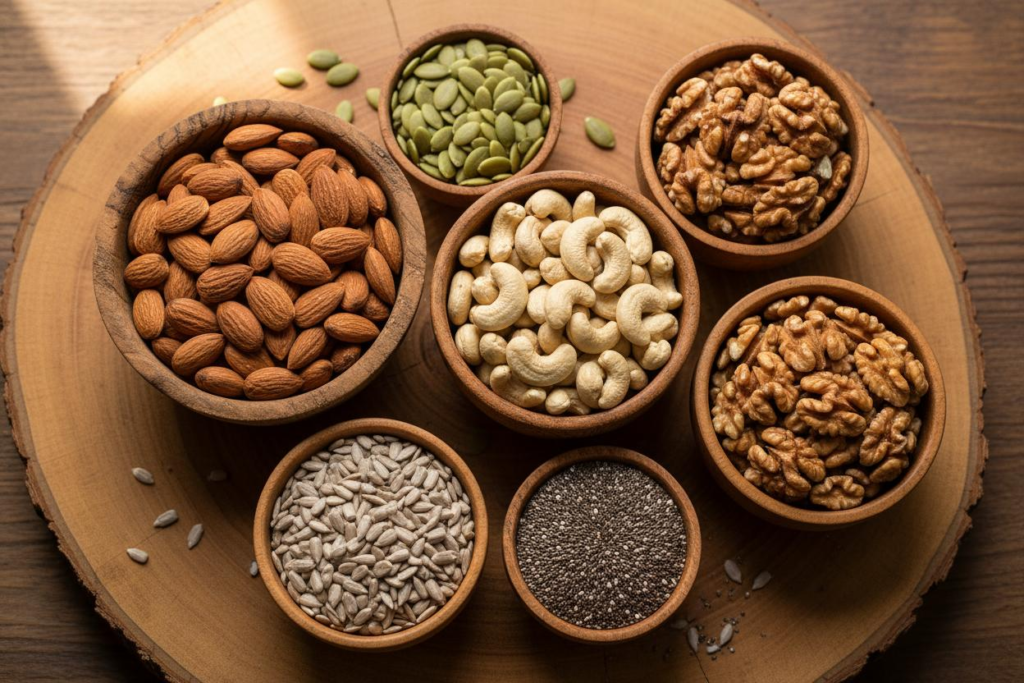
Good options to include
- Almonds
- Walnuts
- Cashews
- Pistachios
- Pumpkin seeds
- Chia seeds
- Flaxseeds
The important point is not that nuts and seeds can replace dental care, but that choosing nutrient-rich, lower-sugar foods can form part of a balanced diet that supports your overall oral health.
Leafy Greens: Nutrients for Teeth & Gums
Spinach, kale, lettuce, and other leafy greens are another group. These vegetables provide a variety of vitamins and minerals and can easily be included in salads, sandwiches, cooked meals, or smoothies.
Adding more vegetables to your meals can also help reduce your reliance on highly processed, sugary snacks. While no individual vegetable can prevent dental problems on its own, a balanced diet is an important part of maintaining general and oral health.

Easy ways to add leafy greens
- Add spinach to breakfast or lunch
- Include lettuce and other greens in sandwiches
- Prepare a fresh salad with different vegetables
- Add kale or spinach to cooked meals
- Include a variety of vegetables throughout the week
Crunchy Vegetables: Simple Choices for a Healthier Smile
Carrots, cucumber, celery, bell peppers, broccoli, radishes, and other fresh vegetables make simple, nutritious snack choices. Their crisp texture means they require more chewing, which can stimulate saliva production. Saliva helps wash away food particles and plays an important role in protecting the mouth from acids.
Instead of reaching for sweets or processed snacks between meals, try keeping a selection of fresh vegetables ready to eat. They provide important nutrients while generally being much lower in added sugar.

Crunchy vegetables to include
1. Carrots – naturally crisp and easy to enjoy as a snack
2. Cucumber – refreshing and high in water
3. Celery – crunchy and easy to pair with meals
4. Bell peppers – available in several colours and rich in nutrients
5. Broccoli – a nutrient-rich vegetable that can be eaten raw or cooked
6. Radishes – crisp and easy to add to salads
7. Sugar snap peas – naturally crunchy and convenient for snacking
For a tooth-friendly eating pattern, these vegetables can be a useful alternative to frequently snacking on sugary foods.
Building a Smile-Friendly Plate
A tooth-friendly diet doesn’t need to be complicated. Think about creating meals that include a variety of nutrient-rich foods, such as vegetables, leafy greens, dairy or calcium-rich alternatives, whole foods, nuts and seeds.
The foods like – milk, cheese, yoghurt, nuts, seeds and leafy greens – are simple examples of ingredients that can form part of a balanced eating pattern.
At the same time, remember that healthy eating is only one part of looking after your teeth.
Food + Daily Dental Care = Better Oral Health
Even the healthiest diet cannot replace your daily oral hygiene routine. To help maintain healthy teeth and gums, make sure you:
- Brush twice a day with fluoride toothpaste
- Clean between your teeth every day
- Choose water or milk more often
- Reduce frequent sugary snacks and drinks
- Follow a balanced diet
- Attend regular dental check-ups
- Seek professional advice if you notice pain, sensitivity or other changes
At Malpas Dental Surgery, regular check-ups and preventive dental care can help identify potential problems early and support your long-term oral health. Alongside routine dental care, the team can provide guidance based on your individual dental needs.
Healthy Food Choices Can Support a Healthy Smile
There isn’t one particular food that can guarantee perfect teeth. Instead, your oral health benefits from a combination of balanced nutrition, good oral hygiene, and regular professional dental care.
From a glass of milk or a portion of yoghurt to a handful of nuts or a plate filled with leafy greens, small everyday choices can contribute to a healthier lifestyle and support your oral health.
If you’re due for a dental check-up or have questions about keeping your teeth and gums healthy, Malpas Dental Surgery can provide personalized advice and ongoing dental care in Cheshire.
Looking after your smile starts with the habits you follow every day, and the food on your plate is one of them.